Product Description
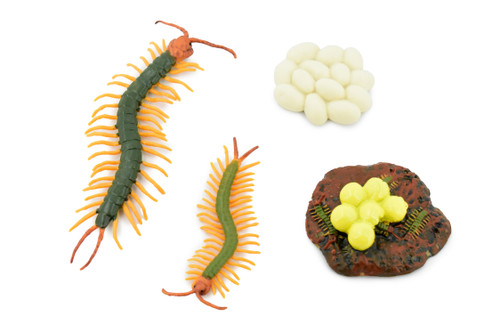
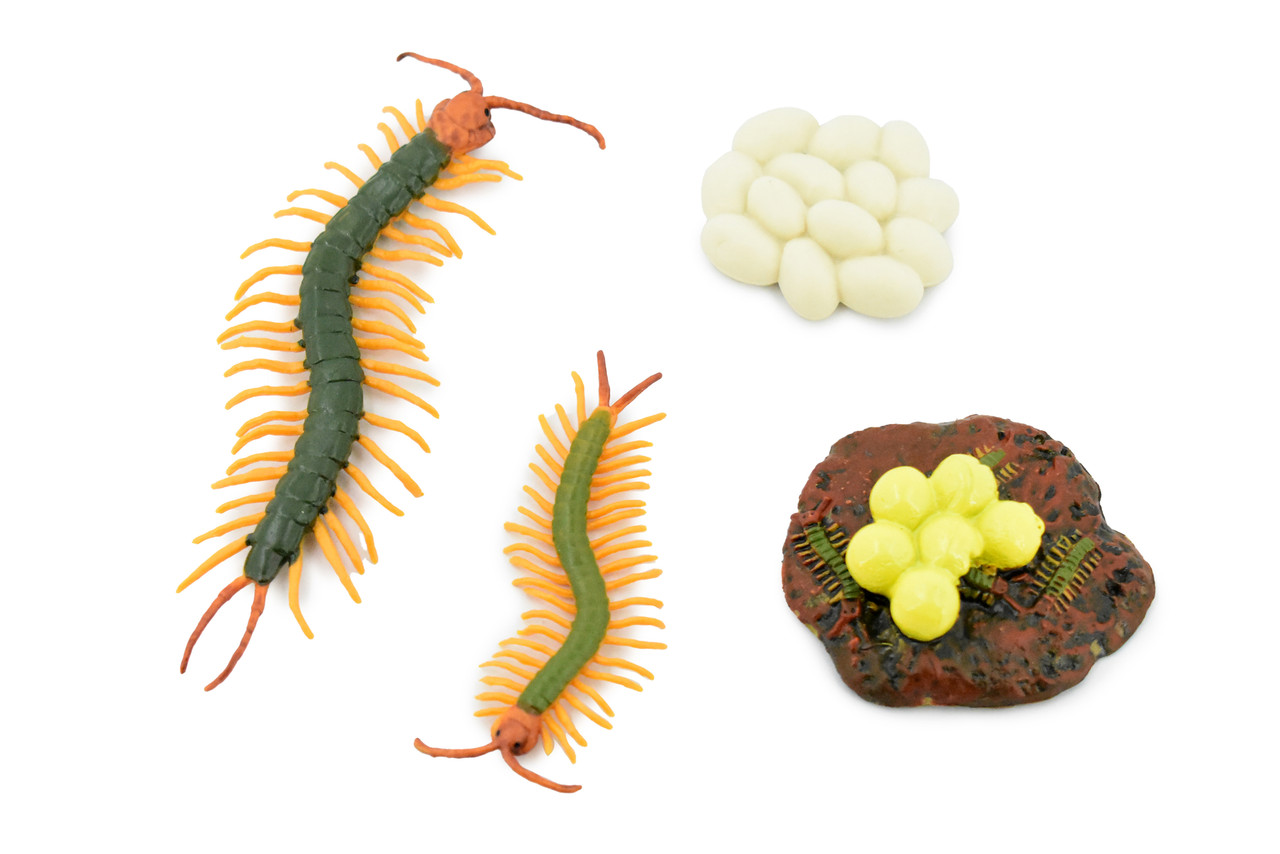
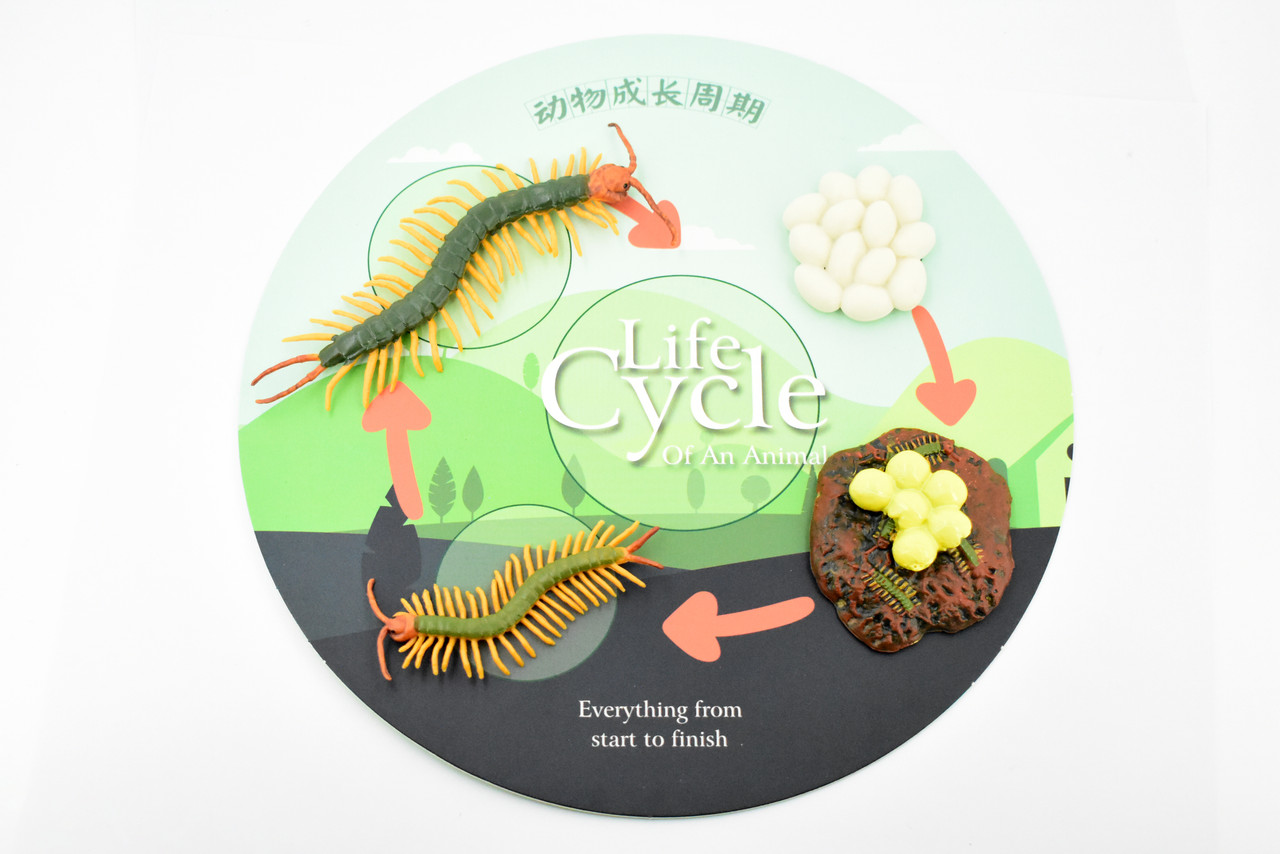
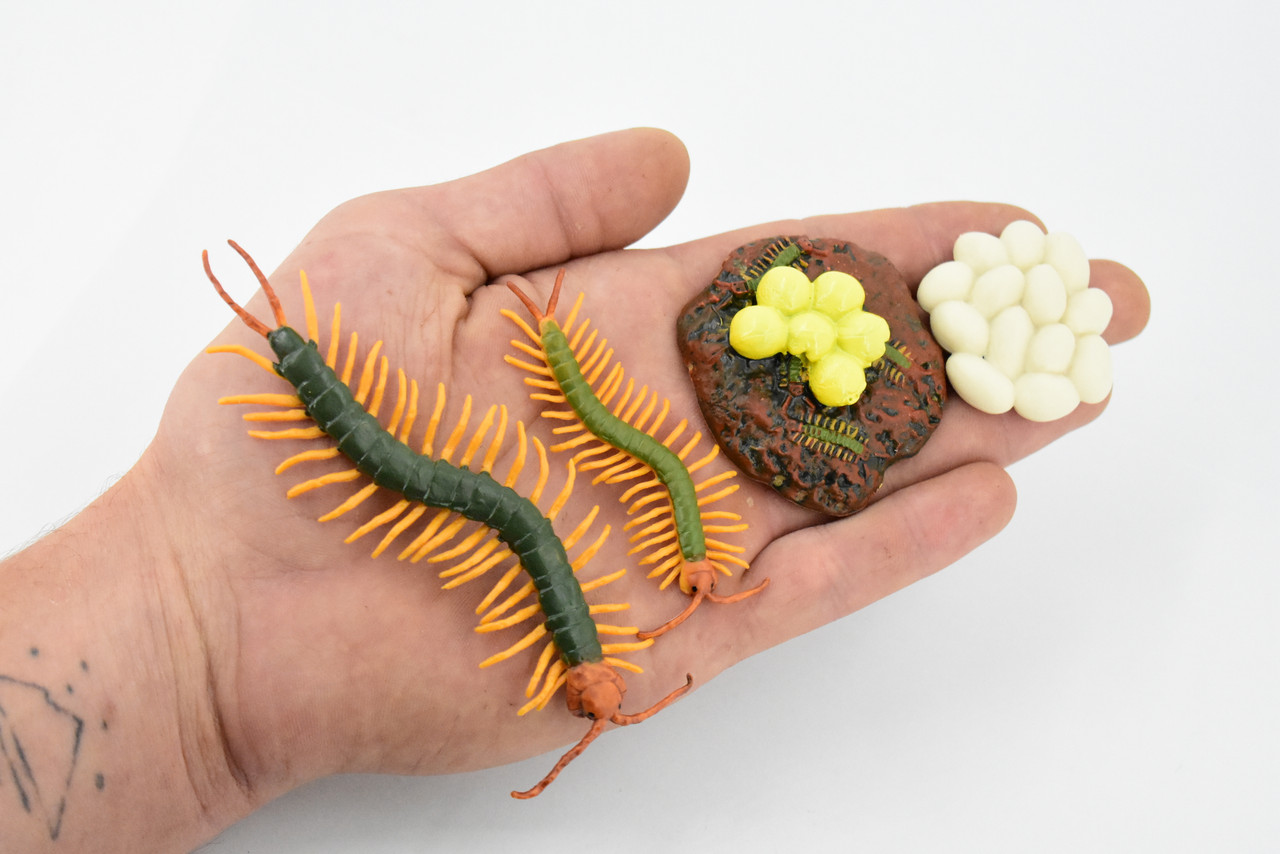
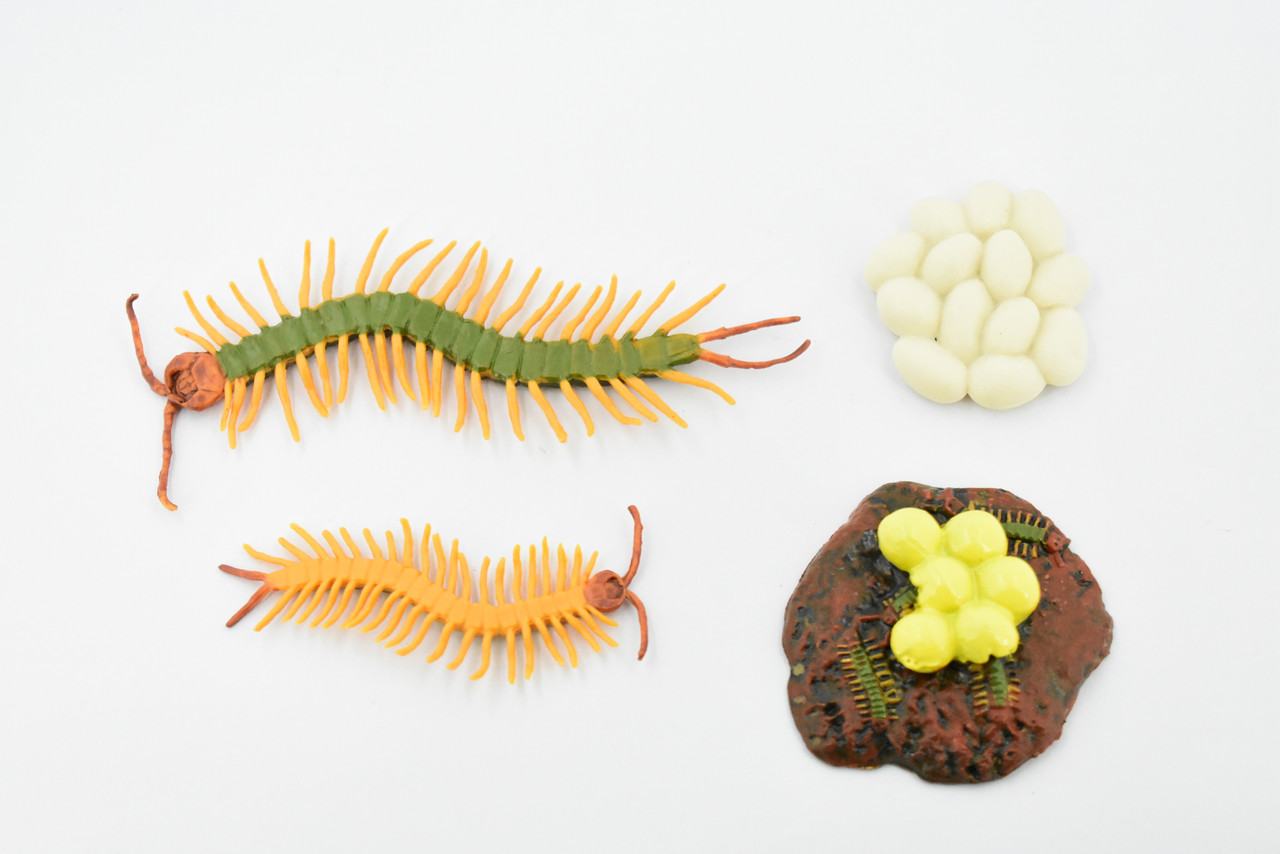
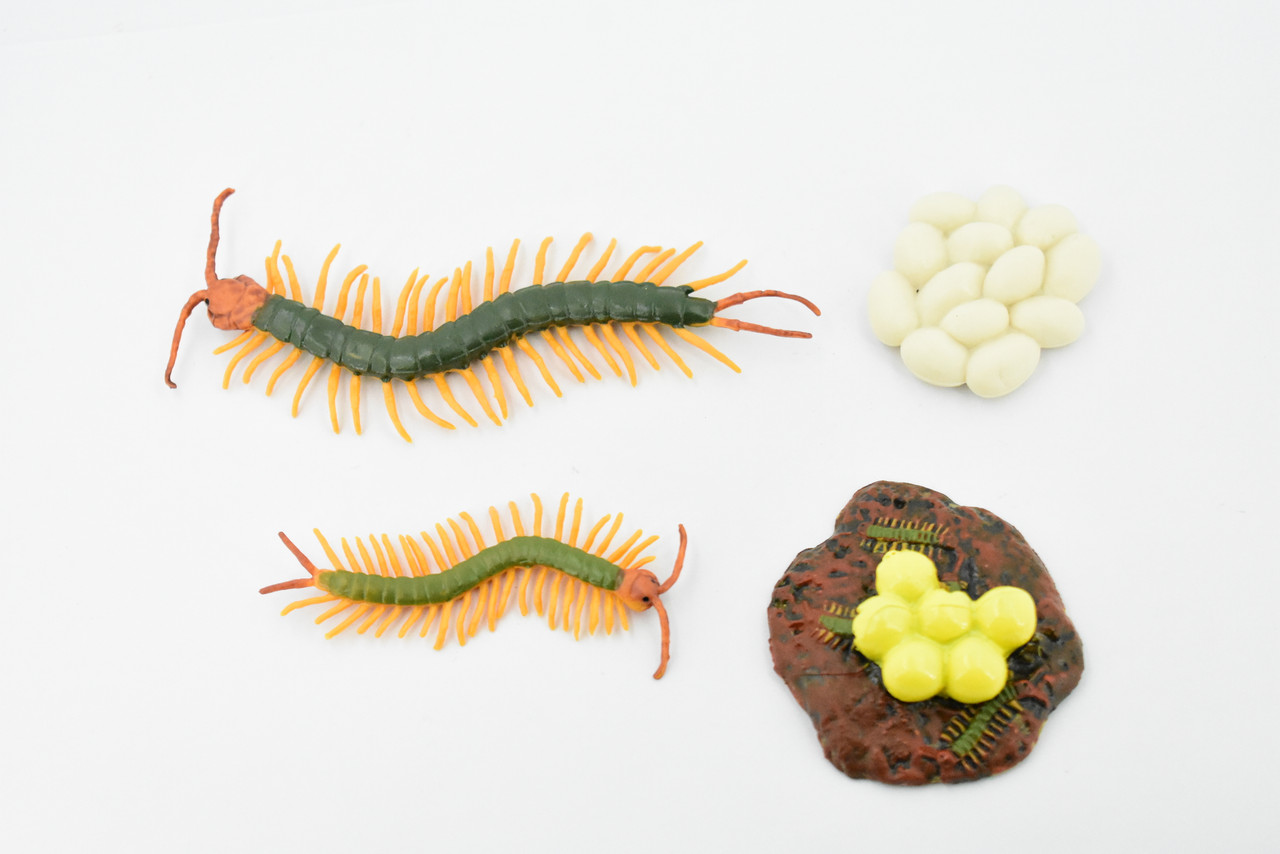
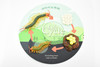
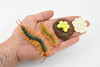
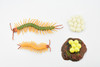
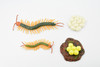
Life Cycle of a Centipede, Arthropods, 4 Stages, Museum Quality, Rubber, Hand Painted, Realistic Toy Figure, Diorama Model, Kids, Educational, 5 Inches.
Centipedes are arthropods in the subphylum Myriapoda, meaning many legs. However, counter to what their name may suggest, centipedes do not actually have 100 legs. While the range of legs on centipedes can vary drastically based on the suborder of the species, no centipede naturally has exactly 100 legs. The average ranges from 30 to 50 legs, while the highest recorded is 350 legs on the Geophilomorpha centipede. Surprisingly there isn’t clear data on the life expectancies of some subspecies of centipedes. However, in general it appears that, barring death from predators or other acts of nature, roughly 5 years of age is the typical life expectancy for centipedes. Some centipedes, like the house centipede, have even been found to survive up to 6 years. During this time, they pass through three primary life stages: eggs, nymphs, and adults.
Eggs, In the springtime, most female centipedes place their eggs in damp soil and cover them in a sticky substance. When the weather is warm, these eggs hatch into nymphs. Surprisingly, some species of centipedes give live birth to their offspring.
Nymphs, Centipede nymphs look like mini adults and have a fairly long process of maturing into adulthood, some even lasting several years. During this time, they molt many times bringing them to a new stage in their development called instars. While many species of centipedes have their full sets of legs when they emerge as nymphs, others will emerge from each molt with more segments and legs. This is common of house centipedes, who will continue to grow legs until their death.
Adult, centipedes and millipedes are often mistaken for one another, however, the easiest way you can tell them apart is their legs. Per body segment, centipedes only have a single leg on each side while millipedes have two legs per body segment. They can often be found inhabiting basements, garden beds, under rocks, and the roots of trees. During the cold months, they seek out areas that are secluded, moist, and preferably warm where they overwinter before producing their offspring when the weather warms up once more.
At Collectible Wildlife Gifts, we cater to a diverse clientele, encompassing families, friends, and educators. Our offerings have garnered the trust of professional organizations, including aquariums, zoos, and movie studios, who rely on our quality and educational value.
Our extensive product line features a variety of items, ranging from plush sharks to educational resources showcasing animal growth cycles. Each product is designed not only to bring joy but also to serve as an effective tool for learning. Whether you’re looking to inspire curiosity in a child or enhance an educational curriculum, our products spark interest and foster a love for the natural world.
We believe that learning should be an adventure, and our gifts make exploring nature fun and engaging. With every item, we aim to create memorable experiences that encourage conversations about wildlife and conservation. Our plush toys provide comfort while igniting the imagination, and our educational materials promote understanding and appreciation for various species.
Join us in celebrating the wonders of nature. Whether you’re shopping for a special occasion or seeking educational resources for a classroom, Collectible Wildlife Gifts has something for everyone. Explore our collection today and discover the perfect gift that will delight recipients of all ages while nurturing their love for wildlife and learning. Let us help you make a meaningful impact with gifts that inspire and educate.