




Product Description
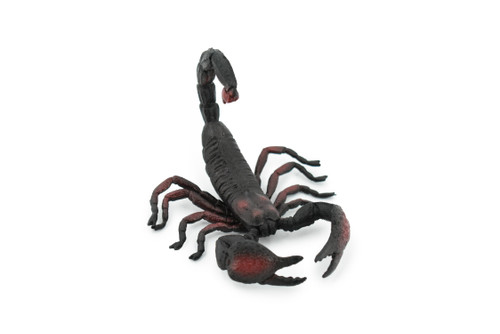
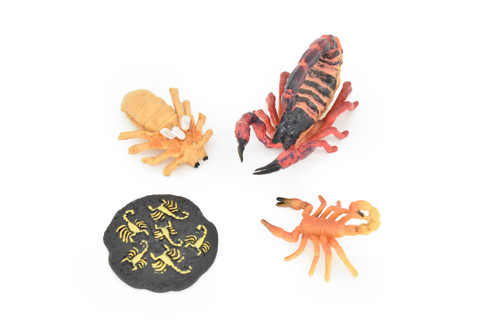
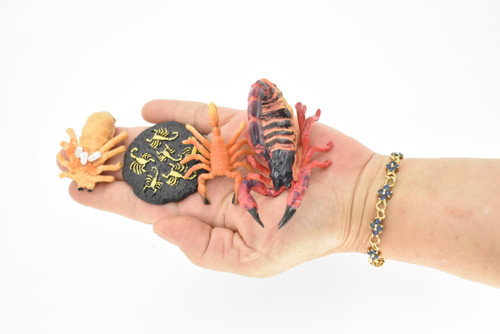
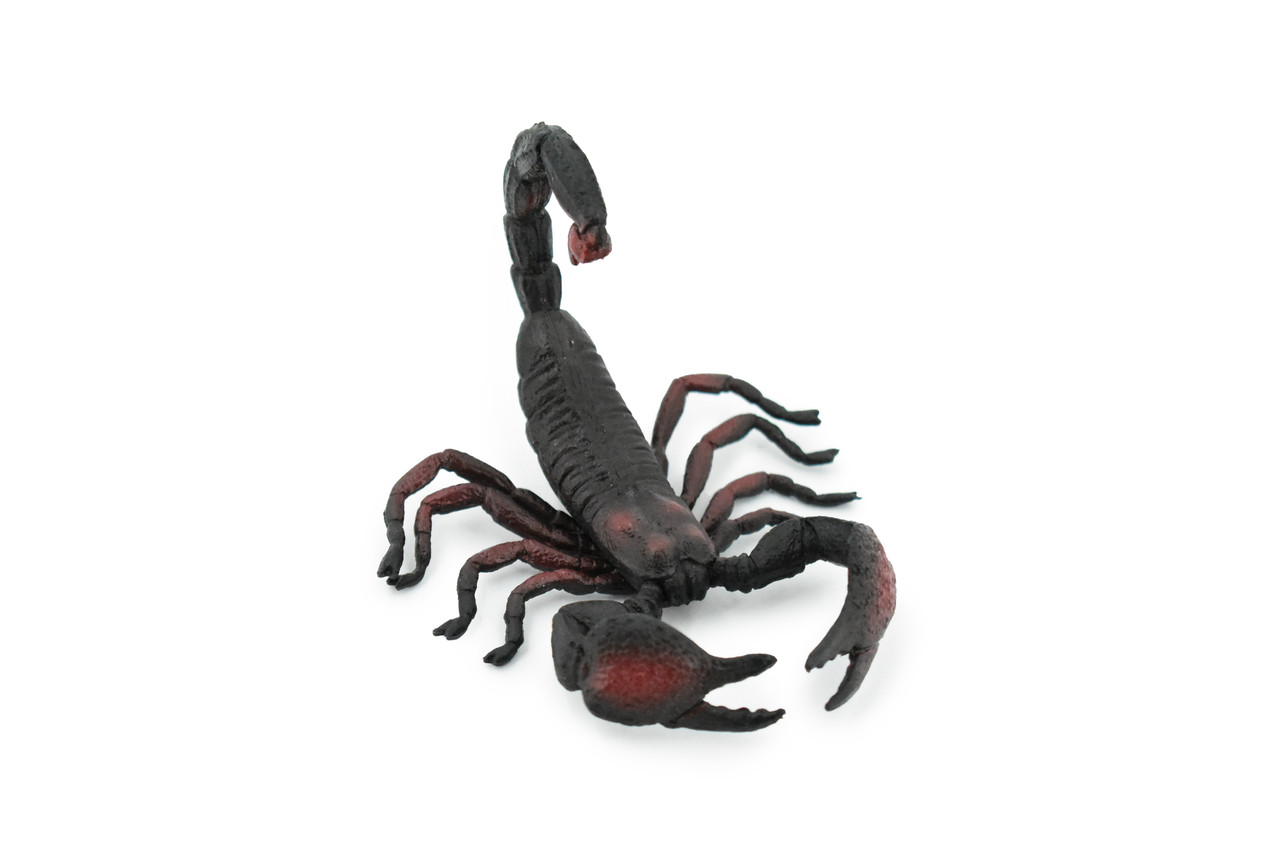
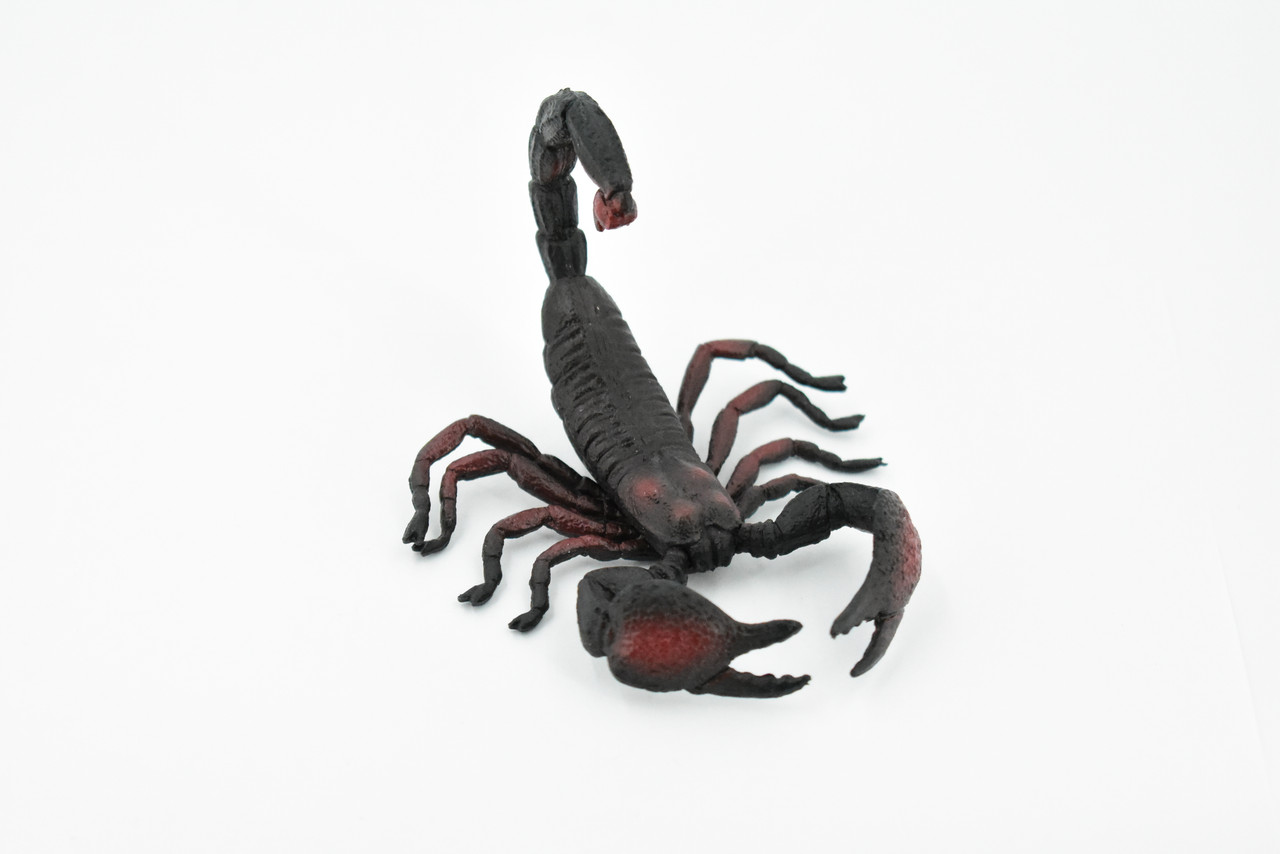
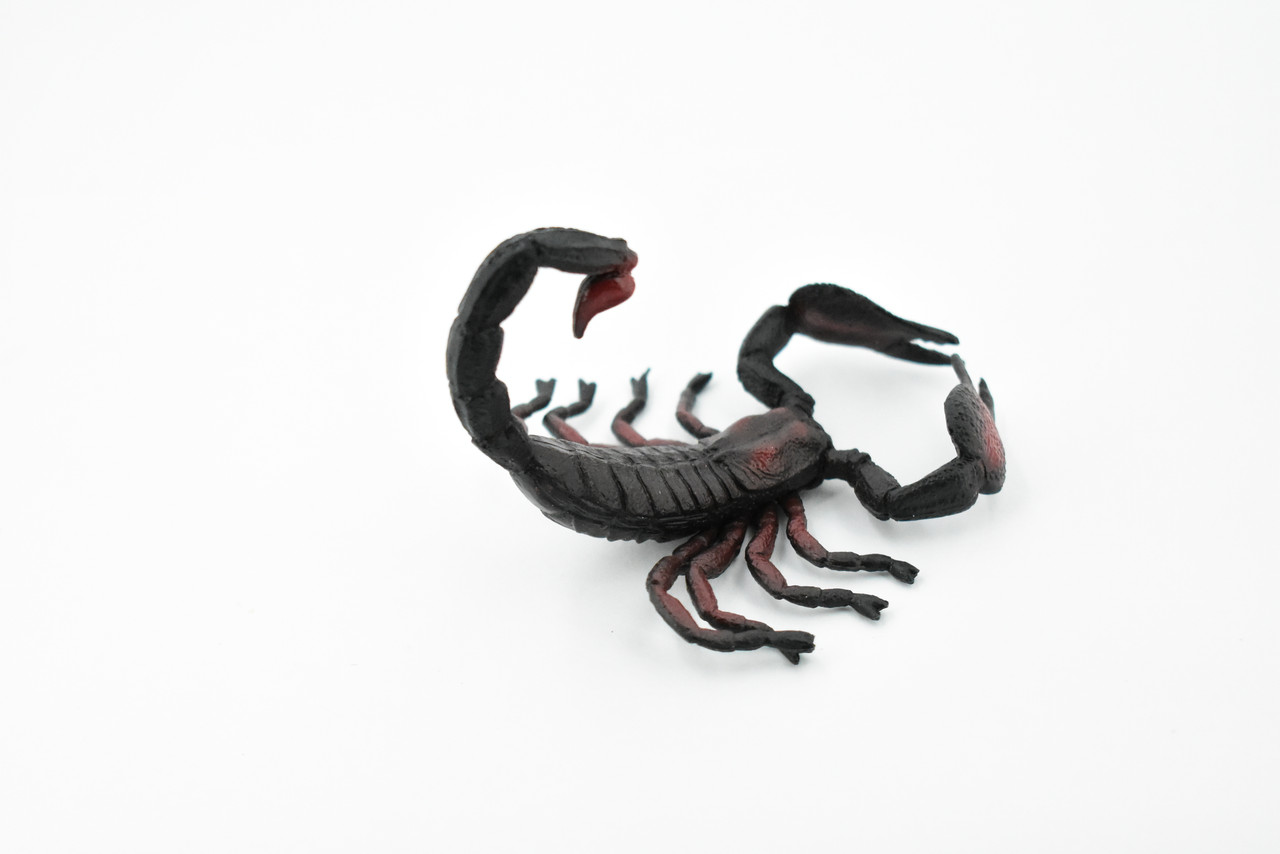
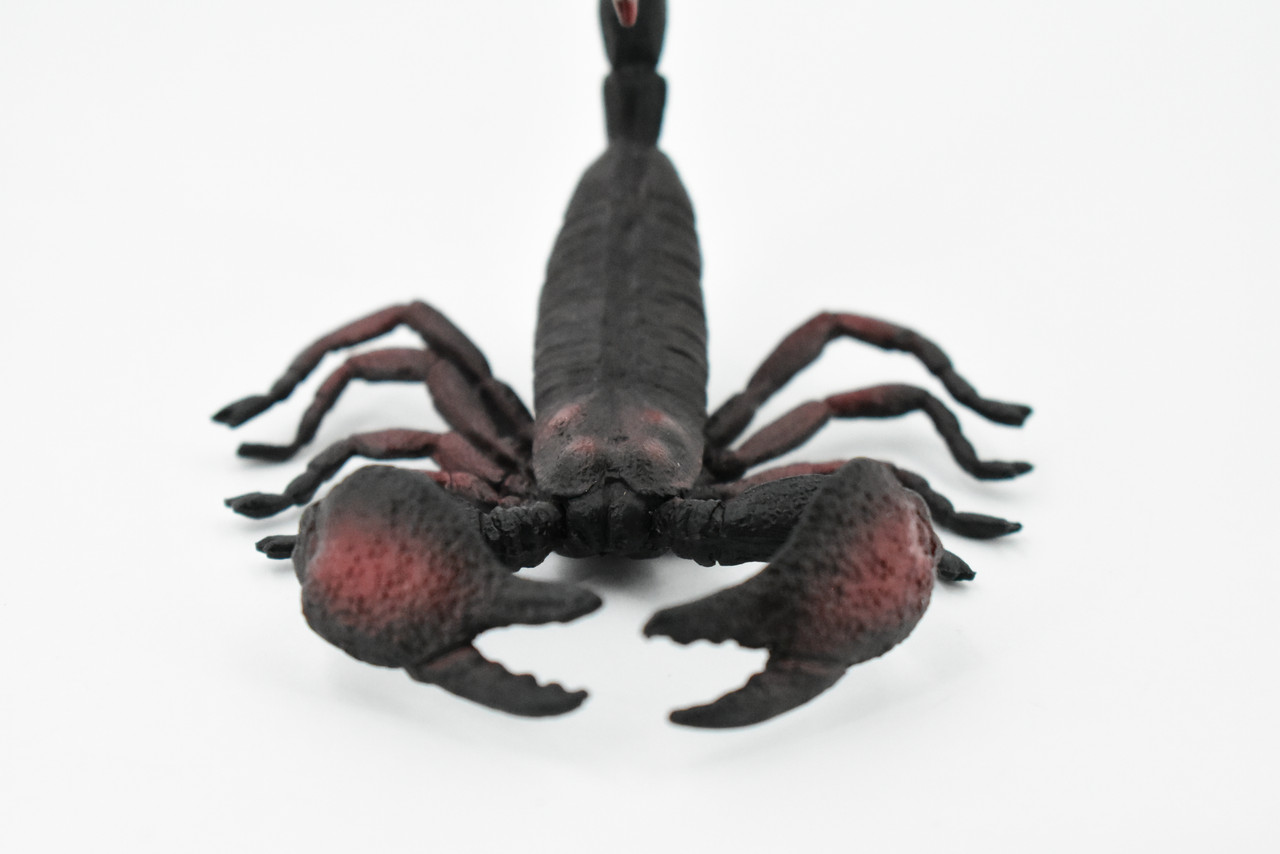
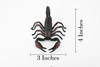
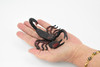
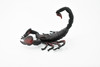
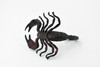
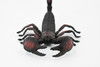
Scorpion, Black and Red, Arachnids, Scorpiones, Museum Quality, Educational, Hand Painted, Rubber Insect, Diorama Model, Realistic, Kids, Toys, 4 Inches.
Scorpions are relatively large among terrestrial arthropods, with an average size of about 6 cm (2.5 inches). Scorpions exhibit few sexual differences, although males usually are more slender and have longer tails than females. In addition to desert habitats, scorpions have adapted to temperate, subtropical, and tropical environments such as grasslands, savannas, and forests. Scorpions lack conventional jaws, and their feeding habits are unusual. An additional pair of pincerlike appendages (chelicerae) are toothed, and, with these tools as well as the sharp edges of adjacent jaw like structures. Scorpions have changed little in the 350 to 400 million years since they first climbed from the primal seas and took their place among earths first terrestrial arthropods. The long, segmented body of the scorpion is divided into two obvious sections: the elliptically shaped body and the trade-mark tail. The body of the scorpion is divided into two parts, the cephalothorax and the mesosoma or preabdomen. The cephalothorax contains all of the sensory, locomotion, and feeding appendages. Two pairs of chelicerae, positioned on either side of the mouth, allow the scorpion to rip and tear its prey while feeding. Combining the sensitivity of antennae with the grasping ability of a hand, the pedipalps (pincers) are used for sensing as well as holding prey while envenomating or eating. Male and female scorpions also use the pedipalps to clasp their mates during elaborate mating dances. Like all arachnids, scorpions have four pairs of jointed legs. Sensory hairs on the legs can detect the vibrations of prey up to 1 foot (30 cm) away. Dorsally the cephalothorax is covered by the carapace. A pair of median eyes atop the carapace, as well as several lateral eyes arranged into two groups along its front edge, give the animal its limited vision. The mesosoma contains the paired genital openings, the spiracle slits that open into the tracheal system allowing the scorpion to breath, and the pectines, a pair of comb-like appendages on the ventral surface that sweep the ground possibly as contact pheromone detectors. The pectines may also help the male find a suitable place to deposit his spermatophore during mating.
At Collectible Wildlife Gifts, we cater to a diverse clientele, encompassing families, friends, and educators. Our offerings have garnered the trust of professional organizations, including aquariums, zoos, and movie studios, who rely on our quality and educational value.
Our extensive product line features a variety of items, ranging from plush sharks to educational resources showcasing animal growth cycles. Each product is designed not only to bring joy but also to serve as an effective tool for learning. Whether you’re looking to inspire curiosity in a child or enhance an educational curriculum, our products spark interest and foster a love for the natural world.
We believe that learning should be an adventure, and our gifts make exploring nature fun and engaging. With every item, we aim to create memorable experiences that encourage conversations about wildlife and conservation. Our plush toys provide comfort while igniting the imagination, and our educational materials promote understanding and appreciation for various species.
Join us in celebrating the wonders of nature. Whether you’re shopping for a special occasion or seeking educational resources for a classroom, Collectible Wildlife Gifts has something for everyone. Explore our collection today and discover the perfect gift that will delight recipients of all ages while nurturing their love for wildlife and learning. Let us help you make a meaningful impact with gifts that inspire and educate.